
A home study course with journalling prompts
to ease your relationship to problems
Gentle notice. The resources here are for those who bought the course and part of how I make my living. If you know someone who would benefit from the guidance, please don’t share this link but kindly send them to www.gentlepower.co.uk/contact
Welcome and an invitation:
0. Let’s begin with a few minutes of attunement…
To set the tone, let’s call in something enlightened to guide the exploration into healthier problem-solving.
Let me be a DJ for a moment and invite you to enjoy this soulful, creative cover of a timeless song, interpreted so beautifully by Jacob Collier.
Jacob is an amazing role model (as a musician and a human) of gentle, sensitive power and of natural alignment.
I recommend the first 7 min for now (and this song as a tool for parking the temptation to “look busy” when solutions are not yet ready; more about it later).
1. How to interact with this course:
As you’ll see, there are recordings, in small chunks to guide you through the material.
There are also journalling/discussion prompts to help you revise your options and integrate your aha’s.
Like with any learning, it’s the engaging with the new ideas that enables understanding and positive change. So please take a moment now to consider how/when you’ll do that.
Minimum suggested interaction (in one or multiple chunks of +/- 15 min):
i) Listen to a segment that calls to you.
ii) Set a timer for 3-5 min and journal (free flow writing) using the prompt for that segment.
iii) Write down one already-doable way that you can apply something that resonated with you.
Already-doable means something very small, that doesn’t require a personality transplant or stress to attempt. Trust that a smaller stepping stone that is actually used will bring more benefit to you than a bigger one that’s only wished for.
Consider extending the benefits of this course (for easier better problem-solving):
a) Where can you place your favourite take-away points or tiny habits as visual prompts to remember to use them? e.g in your your journal
or as wallpaper in your device?
b) Who can you invite to discuss the revision prompts with you, to integrate them and “pay forward” some of the findings?
c) Who can you ask for moral support (e.g empathy or a session) to process your feelings about the problem inventory you made?
d) Who might be a willing buddy to check in over time about your relating to problem-solving in a new way? At the very least, calendar redoing the journalling prompts on a specific future date, e.g 6 months from now
e) What new tiny habit could you adopt to “normalise” healthier problem solving?
2. Why are we so thrown by problems?
A gentler perspective on what problems are FOR
= 5 min:
How we relate to problem-solving, like any impactful thing in life, benefits from revision.
Of course in the moment of a new problem arising, it’s not fun for anyone. You’d have to be a saint to rejoice THEN.
So I’m hoping that you’re interacting with this course outside of the immediate impact of distress that human organism can experience around problems when they arise.
There is value however, in using calmer moments to consider how problems are made harder or easier, depending on how you relate to them.
When you think about it CLEARLY, problems without acting out and unfair external expectations (but responded to with compassion, collaboration and creativity), are simply opportunities for realising our potential.

2a. Revision PROMPT
Set a timer for 3 min and conduct your initial stock-taking, using this journalling prompt:
Where my relationship to problem-solving has been difficult is…
(Be compassionate as you write. Nobody can do more than what they’ve been supported to learn about. You’re opening yourself to more learning through this course so things will only improve from here.)
3. You are not alone, struggling with problem-solving.
Here are some examples of where other participants of this course started their problem-solving upgrade (3 min).
As you listen, allow yourself to acknowledge the inherent vulnerability of dealing with problems and the particular ways it’s hard for people who process life deeply.
Truth speaking is liberating, especially if we invite compassion and championing to it. Do listen with gentleness towards yourself, for what problem-solving has been like for you.
The hero’s journey perspective is that we are all work in progress, on a journey to learn how to become the most beautiful expression of who we are. Problems are here to inspire and guide that quest.
4. The huge yet invisible factor we need to acknowledge when problem-solving in our times = 8 min:
– Recognising the corrosive, MASSIVE impact of organically tolerating information overload
– Why we must learn to EXTERNALISE our options, incl. problems and the process of resolving problems
– What externalising problems means (keep CAPTURING all aspects into NOTES so you can revise them and see new options)
5. Your first, simplest externalising protocol to try out = 6 min:
– A simplified PROTOTYPE for externalising problems that you can try out.
– How to take your problem solving, options and needs seriously: a DAILY check in.
5a. Revision PROMPT:
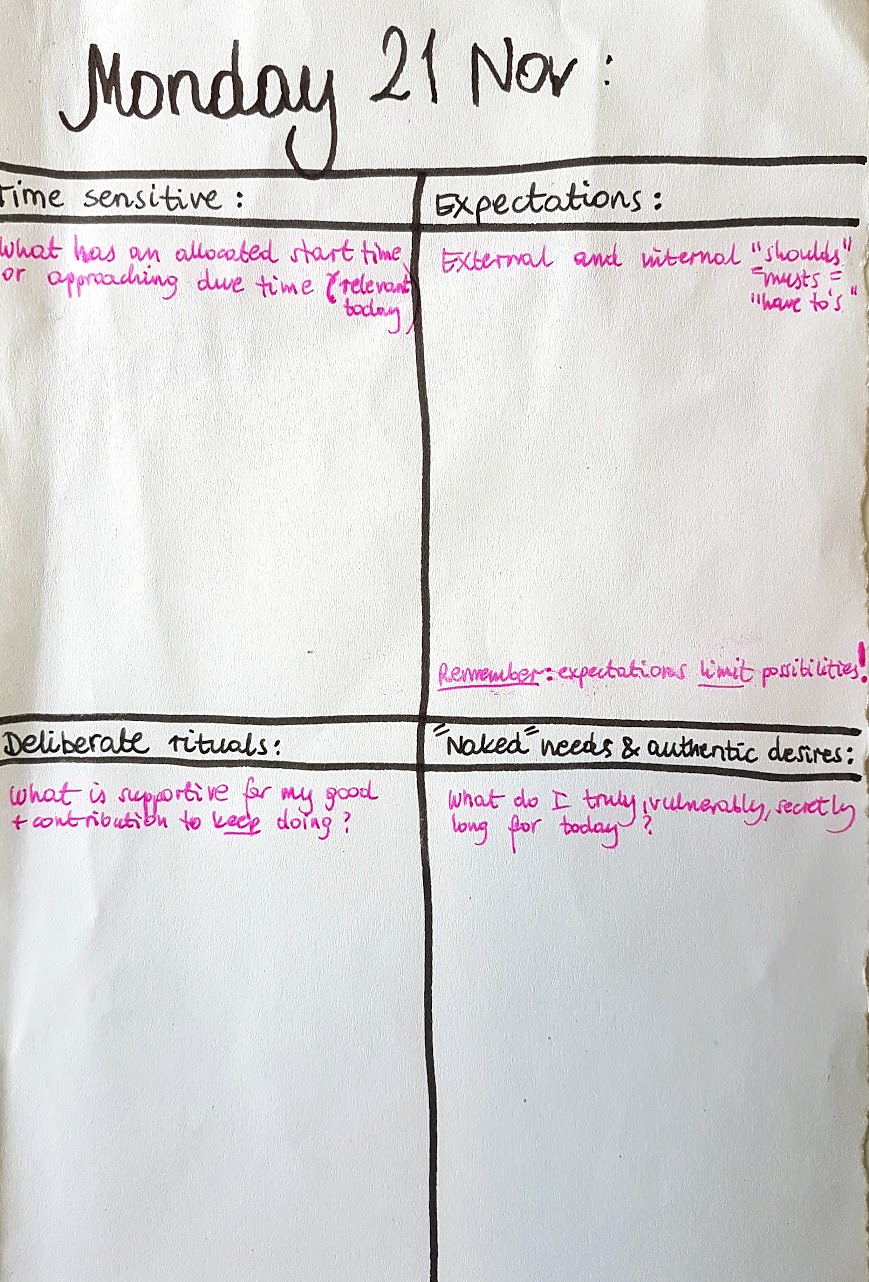
Try externalising your problems and priorities with this daily check-in format (see photo).
Create the four zones and use your calendar to make notes for today or tomorrow.
On paper or in your device, as you wish.
6. Not all problems are created equal: 3 types to be aware of (11 min)
6a. Why your “favourite problems” are especially good allies = 1 min:

6b. Revision PROMPT
What are the problems on your plate at this time?
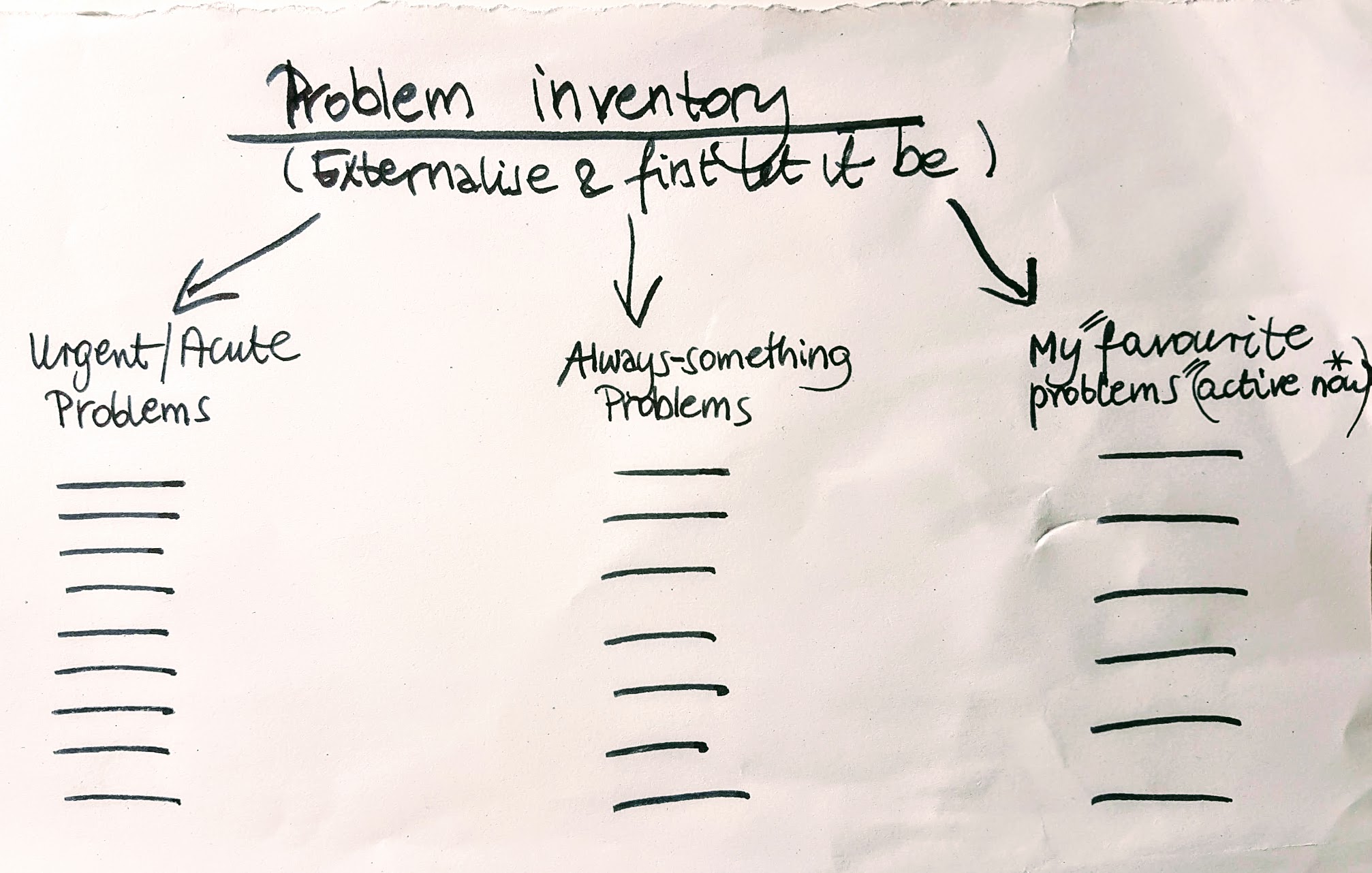
Make an inventory, using the three types of problems mentioned above.
Again, remember to be compassionate: no, you can’t have resolved it “yesterday” and no, it’s not helpful to expect yourself to resolve them “tomorrow”. It will take as long as it takes, but… “there will BE an answer, let it be.”
Let it be… externalised.
For now.
Here is a template you can use for the inventory in a digital form (Google Doc)
7. HOW you articulate problems to yourself makes a big difference too.
The tone or the bias in the inner narrative is a particularly invisible, significant factor.
A key way you can improve your problem-solving is by being very wary of conclusions/expectations that masquerade as “how it is”.
To avoid this invisible, limiting grip on your options, the trick is to learn to formulate your problems as questions.
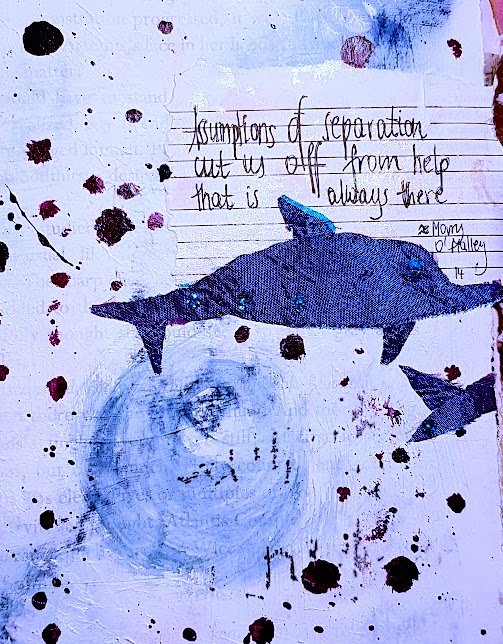
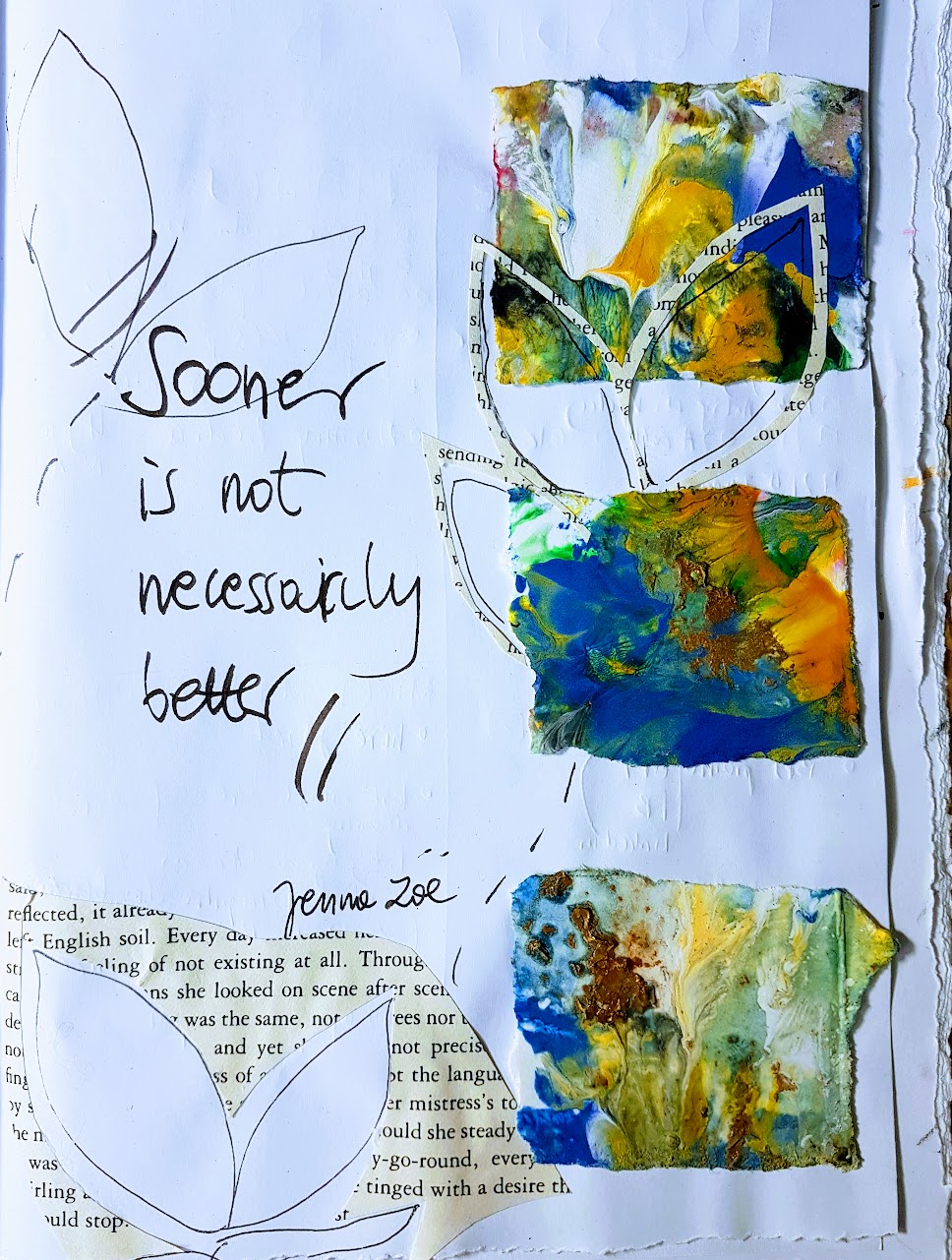
And then, to remember this powerful insight from Mary O’Malley. If you test it for impact, like I did, you’ll discover it’s VERY powerful:
7a. Revision PROMPT
Now, revise your problem inventory so that your notes become more helpful to problem-solving:
i) Look through your inventory and star any items that were articulated as questions.
ii) Consider if you need to ask a BETTER question anywhere there. For any question that lands in you as ONLY depressing, i.e not inspiring any positive spark at all, rewrite it. Better questions focus on what you do WANT rather than only on what the suffering is, what you don’t want.
Compare:
“Am I seriously ill?”
vs.
“How can I understand what my body needs in order to get well?”
iii) Rewrite any statements in the inventory into “good question” format too. Naming what we DO want is the first step to energising us (and support) towards connecting with that in life. In some creative way or other. There are MANY, MANY ways to meet the same need.
8. What does it mean to trust the 80/20 principle, that it’s okay to gather readiness longer? 3 min:
(“There WILL be an answer, let it BE…”)
– You CAN move slowly enough for your organism not to be overwhelmed, esp. if you capture ALL info and insights you get along the way.
vs.
– Pushing from worry and when not yet read is COUNTERproductive to intelligence, creativity and wellbeing.

8a. Revision PROMPT
Consider what can help you to abdicate pushing for resolving problems when not yet ready.
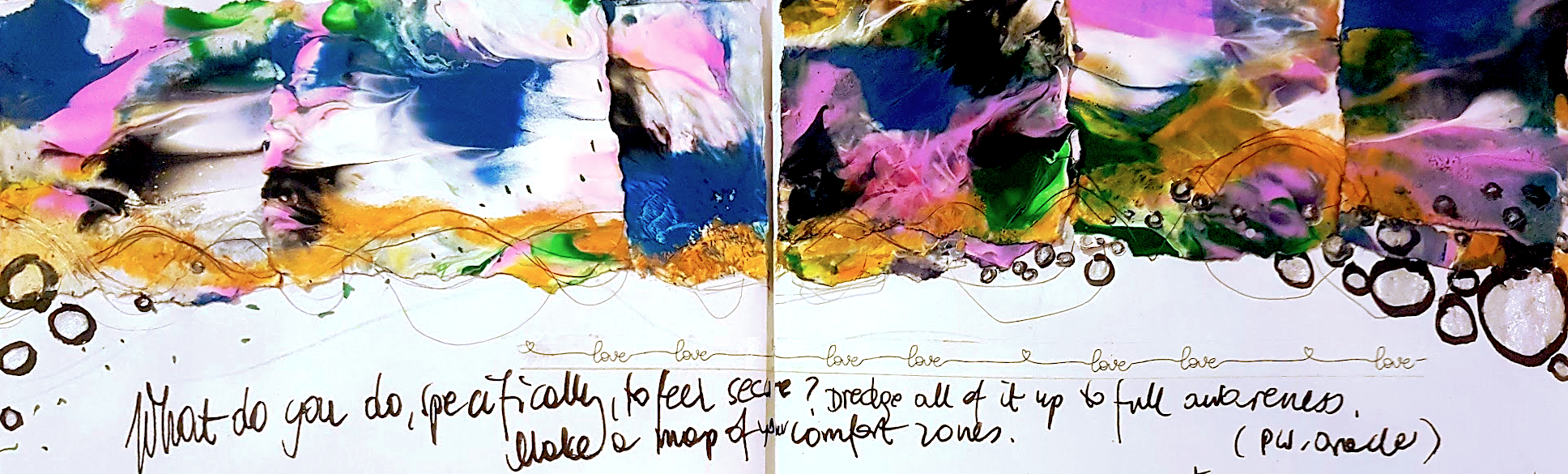
Set a timer for 3 min and journal to externalise your understanding about what you specifically do to feel secure.
Separately from external comfort.
Dredge it all up to full awareness.
Make a map of your comfort zones.
9. What’s the leap between a problem inventory and problem-solving being easier than before?
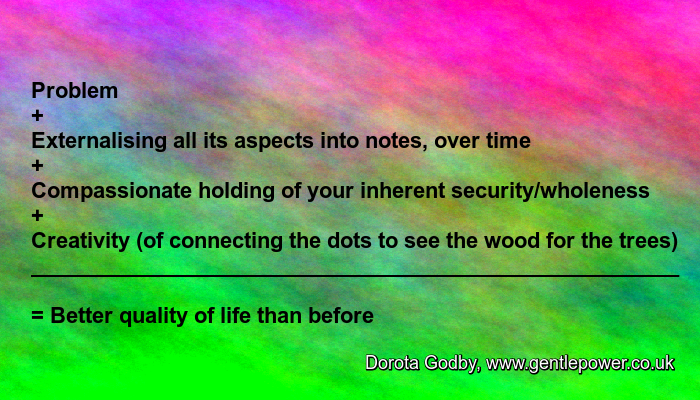
NB: Important to say that one of the most effective ways to access the sense of inherent security is WARM ACCOMPANIMENT.
Because anxiety and urgency increase during alarmed aloneness and then it’s hard to access even the solutions you know about, let alone face the unknown (which of course is the default when dealing with problems).
One way or another, warm, resonant response to what’s gathering in your problem-solving notes is essential in this puzzle.
Who can be an ally (e.g an empathy buddy) for this for you?
vs.
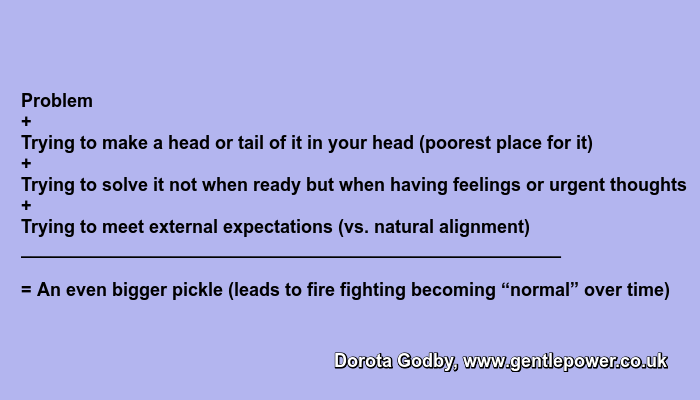
This is my overview of how we (innocently) get ourselves into trouble on top of problems:
9a. Revision PROMPT
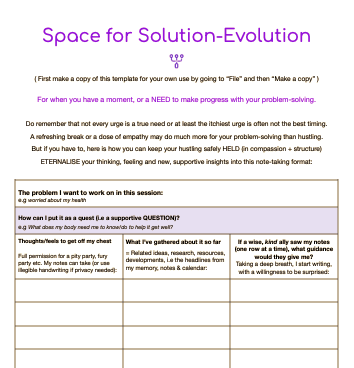
Here is one note-taking format you can use when you want to work on EVOLVING your solutions for a particular problem.
Take one of the problems from your inventory and make further notes about it, using this template.
10. Dealing with pressure from others, while incubating your “latest, responsible moment to act” = 7 min:
-
You’ll be strong enough, if you’re allowing yourself to operate from your natural alignment (vs. other people’s “normal”/”shoulds”/rules/expectations).
-
Have compassion for living in a world that pressurises people to live outside their natural alignment. Trust that your soul chose to be here, for a good reason.
-
If you don’t know where/how you are sensitive and how you NEED to function, consider getting a Human Design chart which is a good map (more info at the end).
10a. Revision PROMPT
Set the timer for 3 min and journal about what you’ve already noticed is a good way FOR YOU to calm/park/delay pressure from people.
This step is about externalising your wisdom so it’s more visible to you.
You may be surprised by how much you’ve already learned. Help yourself lean into it more.

11. Let’s not forget the COMPOUND EFFECT of living with and learning from problems all your life so far.
We notice problems more intensely than the strengths and resources they develop in us!
Externalising the WISDOM you’ve gathered through your problem-solving is amazingly helpful too.

11a. Revision PROMPT
There are great ways of relating to problems that you’ve already learned about but don’t always remember to lean into.
Set the timer for 3 min and journal to externalise what you already know works WELL for you when relating to problems.
Where can you save what you remind yourself of here so that your own wisdom can support you better going forward?
Hint: Create one, go-to place for your “Problem Solving” and make it your default to open it whenever you want to think about a problem.

12. Congratulations: You’ve completed your revision of how you relate to problem-solving!
You’ve got the foundations and the question is: how will you build on those, i.e how will you develop your problem-solving FITNESS?
Because the old painful ways are only one underpar day away.
On a low day, when overbusy, tired or unwell, we all default to the last INTEGRATED response. New understanding such as the one you may have experienced here won’t be available in practice without fitness TRAINING.
So my last support for you here is to offer some ways you can train your problem-solving stamina going forward.
i) At the very least, if you got the main message in this course at all (about the power of externalising options)…
You’ll want to create a “Problem-Solving” FOLDER. In whichever app/device you use a lot, such as Google Keep, Evernote or Apple Notes.
A dedicated paper notebook will work less well (even though I love paper, I owe you to share the truth I’ve come to).
BUT paper notebook will work better than NOT using any one place for externalising everything about a particular problem.
ii) I’m hoping that from now on, you’ll keep gathering and capturing ALL info relating to problem solving in your life into that externalising “pod”.
Put your notes from this course into it.
Put the problem inventory you’ve made into it.
And create a subfolder for each problem you want to take on resolving.
Keep capturing stuff for longer than you think it should take: until you’re 80% ready to look a particular problem in the eye.
iii) Review your problem-solving folder with a good ally, for courage and increased creativity.
As you do so, affirm this: My answers are here already if I only look through and connect the dots.
And then write to me (I’d LOVE that!) to tell me about your breakthroughs and how externalising made you wiser and your heart lighter.
I made it simple, just fill in this form. It will email you your answers too so you can save them into your pod too.
iv) About writing to me.
Do write to me in the future too and tell me (externalise!) how the insights from this course are growing for you.
And anything else that will help your aha’s to stick better in you.
It will be a delight for me and it will further work that externalising muscle for you.
This is how your problem-solving stamina or any stamina developes.
v) A word about hiring a coach.
If you can afford to and you have a particular problem that’s haunted you long enough on your own, hire a coach.
A coach is a human externalising “pod” with additional advantages such as soothing empathy, warm resonance and synergy from co-illuminating things.
This is what I offer too when working one-to-one and if you’d like to chat about that process with me, book my Free Orientation Session (30 min).
I’d be glad to talk. This is what I love doing. So much so, that I’d also like to offer students of this course…
one 90 min Problem-Solving at less than 1/2 my normal fee (£35 instead of £75)
You’ll still need to book the Free Orientation chat first, just mention you’d like to take me up on the offer when we speak.
Looking forward to the next opportunity I may be able to support you to externalise and improve your problem-solving.
With warmth and curiosity,
(✿◠‿◠)
Dorota

12a. Note-taking PROMPT
Here are some of the resources that inspired my insights into problem-solving.
Would it support you to bookmark this page or copy these resources for your future use?
- “Building A Second Brain. A Proven Method To Organise Your Digital Life And Unlock Your Creative Potential”, book and work by Tiago Forte
- “What’s in the Way Is the Way: A Practical Guide for Waking Up to Life” book by Mary O’Malley
- “The 80/20 Principle: The Secret of Achieving More with Less” book by Richard Koch
- “Essentialism: The Disciplined Pursuit of Less” book by Greg McKeown
- “Introvert Power: Why Your Inner Life Is Your Hidden Strength” book by Laurie Helgoe
- Natural Advantage work developed by Marloe Bouwmeester
- You can generate your Human Design chart for free (and buy quality explanations) at Jenna Zoe’s site
- For one-to-one readings in Human Design, I wholeheartedly recommend Bingz Huang who is also a specialist in human sensitivity