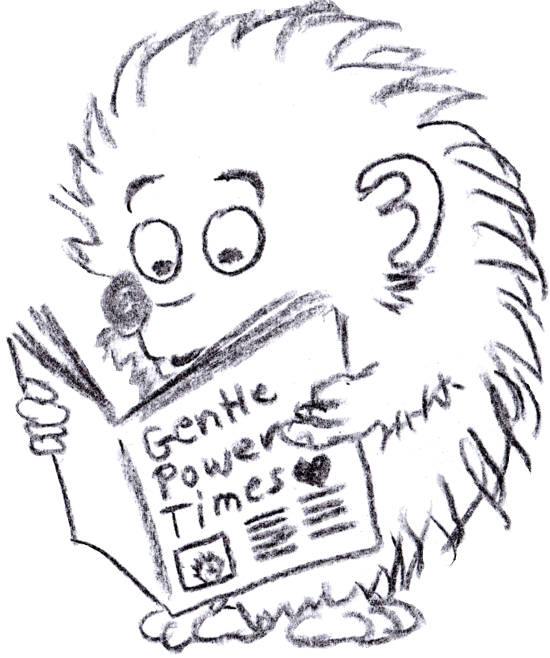
 You cannot be sensitive in this world and not experience someone judging you for being “too sensitive”.
Sometimes people criticise sensitivity out right, sometimes in underhand ways such as telling you it would be good for you to “grow thicker skin” or “live a little” etc.
Either way, it’s not a nice experience but whether it gets to you or not ultimately depends on you.
So, here are my three mistakes to avoid and three empowered responses to put-downs.
DO’S:
1. Educate yourself about natural sensitivity
So that you know why it’s normal, what are its inherent advantages and disadvantages and how being naturally sensitive differs from mental health disorders.
If you don’t doubt or dislike sensitivity in yourself, others’ criticism will not matter and it won’t get to you as much.
And if it does, your sensitive education will show you how to reset a rattled sensitive system more swiftly so you can find your centre and a wise, kind response.
Two places I can recommend for the missing education about natural sensitivity are:
a) Dr Elaine Aron’s main site at www.hsperson.com
b) My site for sensitive professionals at www.gentlepower.co.uk
2. Apply the first aid first
Remember that the most effective way to turn emotional hurt around is to respond to yourself with WARM ACKNOWLEDGMENT (not assessment!) of what’s specifically happened.
Find your best source of such gentle acknowledgment for each criticism you receive and how it’s affected you.
It doesn’t matter what the source is, as long as it provides warm acknowledgment.
It can be your inner witness, a friend or a non-human source such as a journal, a tree or even a teddy.
As long as the witness notes kindly that such and such happened for you and how it affected you, your nervous system can exhale and begin integrating and moving on from the difficult experience.
3. Lean into available help
Be willing to use the source of acknowledgment that is available rather than waiting for your ideal scenario that isn’t.
Empathy in the moment of hurt leads to accelerated healing.
Delaying acknowledgment lodges the impact of emotional hurt into your body and makes recovery harder than it needs to be.
DON’TS:
1. Don’t be too sensitive (only joking ;-D )
The last thing you’d want to do is act “sensitive” about being sensitive.
Reactivity justified by being sensitive is what gives sensitive people a bad press in the first place and it doesn’t help anyone.
Being a highly sensitive person means having a super responsive nervous system which you need to learn to steady and pilot.
Sensitivity is not a licence to react from your emotions.
I know that you know this already, just a gentle reminder against those moments when indignation masquerades as empowerment.
2. Don’t get needlessly hurt by generalisations.
Critical voices tend to speak in generalisations which are by default untrue and unusable.
For anyone.
About anything.
To take a generalisation personally is to volunteer to be hurt by nonsense while blaming either the speaker of yourself for the hurt.
You’re smarter than that.
Unless you’re after justifying reactivity with your sensitivity in which case I can’t help you at all.
3. Don’t listen to a critical voices defensively.
This is a foundational skill in mutually supportive communication and in healthy relationships.
“Listen to learn” is what Alison Armstrong, a brilliant partnership teacher calls the alternative. Nonviolent Communication skillset calls it listening for unmet needs.
Either way, defensive response to criticism doesn’t work because it misses the point that criticism is a counterproductive attempt to do something about unmet needs.
If you find out what the person is needing underneath their worry or frustration with you, you’ll have options to respond constructively to those needs and do something kind.
For yourself and the critic.
A critic you respond to with genuine interest in their needs prompting what they said about you becomes human again.
Often, they are so surprised that they become a deep appreciator of who you are which is the biggest victory over criticism I’ve experienced and you can hope for.
And if they don’t, you get to decide if you want to put in more work towards supporting their unmet needs or to set tighter boundaries if talking with them again.
May these tips serve your integrity and support your beautiful, healthy sensitive constitution.