When people finally reach out for my decluttering support, it’s often after they’ve exhausted themselves trying and failing to declutter one item at a time.
They’d look for something to let go of, typically in the moment of feeling oppressed by their space, like looking for some ballast to throw out of the sinking hot air balloon, only to see themselves sink faster than they can throw stuff out.
There are simply TOO MANY items to deliberate over one by one and not enough free time for most people to be able to get there this way.
And.
Without connecting to the big picture of what you want to achieve by decluttering, you won’t ever feel like you got there anyway.
How decluttering gets derailed
You know how it goes.
You put something in the bag “to go” and your partner or your kid takes it out again when you are not looking. Or your partner tries to add YOUR stuff to the bag in secret to help you get there and when you discover that, you need to look through the bag again to protect yourself against something valuable being lost without consideration.
Except, looking through the bag again, you have second thoughts because the mind can always think of a reason why you might need something “one day”.
Yes, the mind gets overwhelmed and the decluttering job is never done without a structure that will hold and guide the process to completion.
What it looks like when you got it done
Decluttering completion is a place where the volume of belongings you keep is so low that it’s easy to look after what you’ve got.
At the same time, what you’ve kept is so aligned with who you are and how you want to live, that you feel your belongings are really supporting ease and thriving for your everyday life.
This destination is hard to reach by random, sporadic action.
It takes STRATEGIC, whole-home thinking about your living space and the life you want to lead there: how you use each corner of your home and what you want to do there more easily.
It also takes what most people are not used to doing: tuning in with what your life NEEDS.
Empathic decluttering is rooted in understanding of your needs
It’s impossible to measure this but my guess is that most people are either fighting what they don’t want or are busy chasing what they think they must have in order to be happy.
But fighting and chasing take all energy you have and leave little satisfaction in return.
If you want to satisfy your needs and for your living space to support flow and joy in your life, you won’t get there by guilty, sporadic gestures.
It’s completely understandable and in many ways admirable that you feel compelled to keep keep trying. You long to unburden your living space and life and I wholeheartedly support this. And, I’d love you to change things for real rather than bleeding your energy in vane.
What makes decluttering doable are two essential things:
1. Empathic structure.
2. Support to complete the process.
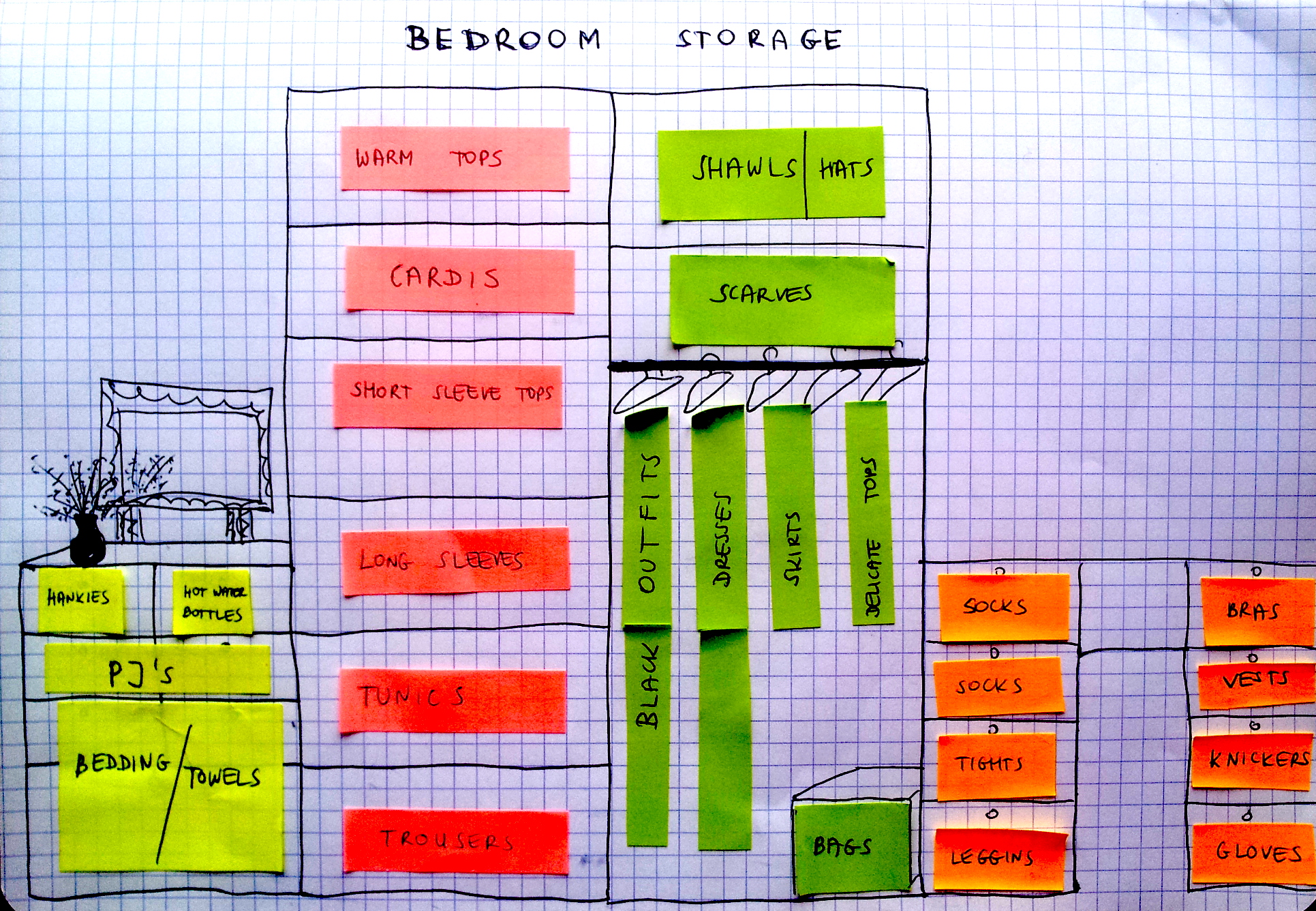
By empathic structure I mean the kind of framework that tracks your needs (and other occupants’ needs) for the space and which translates these needs into a doable plan of action.
When you get clear on what you want to be and do in your space, which furniture and area will serve which activity, then you can pick the best items to keep to match that furniture capacity (and the functions you want your space to support).
With structure and support (and a little healing if needed to allow them), you will bless and gift excess stuff forward because you’ll see how it gets in the way of the happy home space you want.