One is a temporary state that ANYONE can experience, the other is a type of constitution a person may have, specifically 15-20% of persons do.
If someone’s operating system in naturally highly sensitive, they are more impacted on contact.
The way a laptop will be more impacted on being dropped than a stone.
The laptop/stone metaphor helps to highlight another key difference when your nervous system is sensitive: in levels of alertness when in interaction.
Highly sensitive people are the canaries in the mine
It’s not a coincidence that it is a girl on the spectrum (Greta Thunburg) who’s waking the world up to the state of the planet. She’s too alert to ignore what the less sensitive still can.
For now.
And yes, having a sensitive system is not a yes or no question but a spectrum.
One spectrum the research has shown is that of 20/80% of highly sensitive and not.
Another spectrum people have mapped out is what’s called Autistic Spectrum which refers to those whose nervous systems are more extremely alert, often to the point of “normal” life being undoable.
In the pathologising culture, phenomena like Asperger, Autism, or Sensory Processing Disorder are seen as disorders. But from the point of sensitivity, they are just ways some nervous systems are superbly sensitive.
Does it make sense?
The same stimulus registers differently, depending on the receiving processing system.
An apple falling off a tree will get bruised, a glass falling onto the floor may get shuttered, a tennis ball will just bounce back.
A shout is fine for some, a whisper is too much for others.
Why does it matter?
Because if you say to someone who is having a sensitive moment to not be so sensitive, it’s “only” crude and unhelpful.
But if you say it to somebody who has a sensitive operating system, it’s an act of undermining the very fabric of their being and as such it’s not only unhelpful but violent. Whether you meant it or not.
It’s been over 20 years since Dr Elaine Aron coined the term Highly Sensitive Person (HSP) to refer to the constitution type she discovered in her research. But it’s still largely unknown, even among the care professionals hence the need to illuminate this for more people.
Let’s illuminate the path for more people
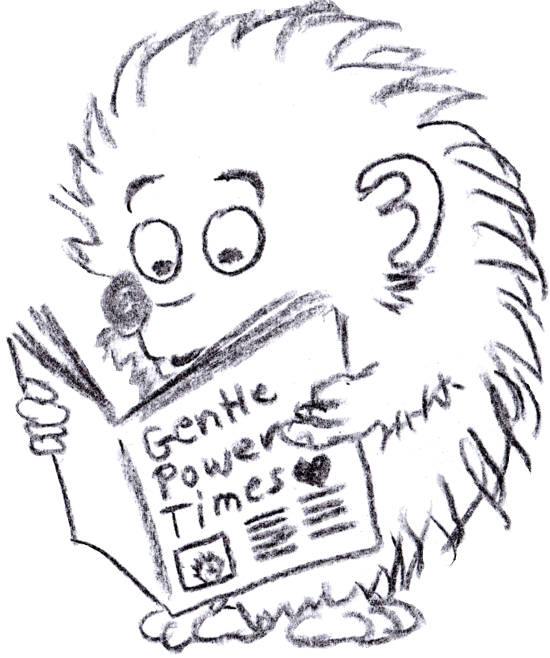
Please help me reach more people with the missing education about it and if you know someone who tends to feel/act sensitive relatively often, please connect them with this information, share this post and recommend my Gentle Power Times newsletter?
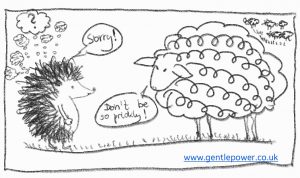
PS. A better response to someone acting sensitive for whatever reason is to offer them space and gentleness, the way you’d instinctively do for a curled up hedgehog.
If in doubt, ask what would support them in the moment as human hedgehogs have the benefit of being able to speak.  🙂
PPS. Feeling sensitive over longer period can also be a sign of unhealed trauma I.e. not all longer term sensitivity is constitutional. But here too, you can’t go with offering or requesting extra space, gentleness, kindness.